
























New published products


News

Star has informed us of a change to the warranty process. This will take effect on the 1st of March 2025.
...Star has informed us of a change to the warranty process. This will take effect on the 1st of March 2025.
Here is a breakdown of the relevant points for you:
• Star will take full responsibility for repairs under warranty from the 1st of March 2025 onwards.
• After the 1st of March 2025, warranty work will be performed by authorised Star Service Centres.
• All products that are still under warranty will be covered by this new warranty agreement.
Here is the procedure:
• The customer must contact Star Technical Support.
• Tel: +44 1494 471111 or by e-mail: support@star-emea.com
• If Star Technical Support cannot solve the problem, the case will be forwarded to the Warranty Department. If the product is covered by warranty, an RMA will be issued.
• Star will inform the customer where the device should be sent (the customer is responsible for the shipping costs).
• The shipment is carried out by the company’s own courier service or the service arranged by Star.
• After the repair, the device will be returned to the customer at Star's expense.
Further details on the change to Star's warranty process are available upon request from your sales representative. Do you have any questions? We will be happy to assist you with our expertise and service – let us know how we can best support you!

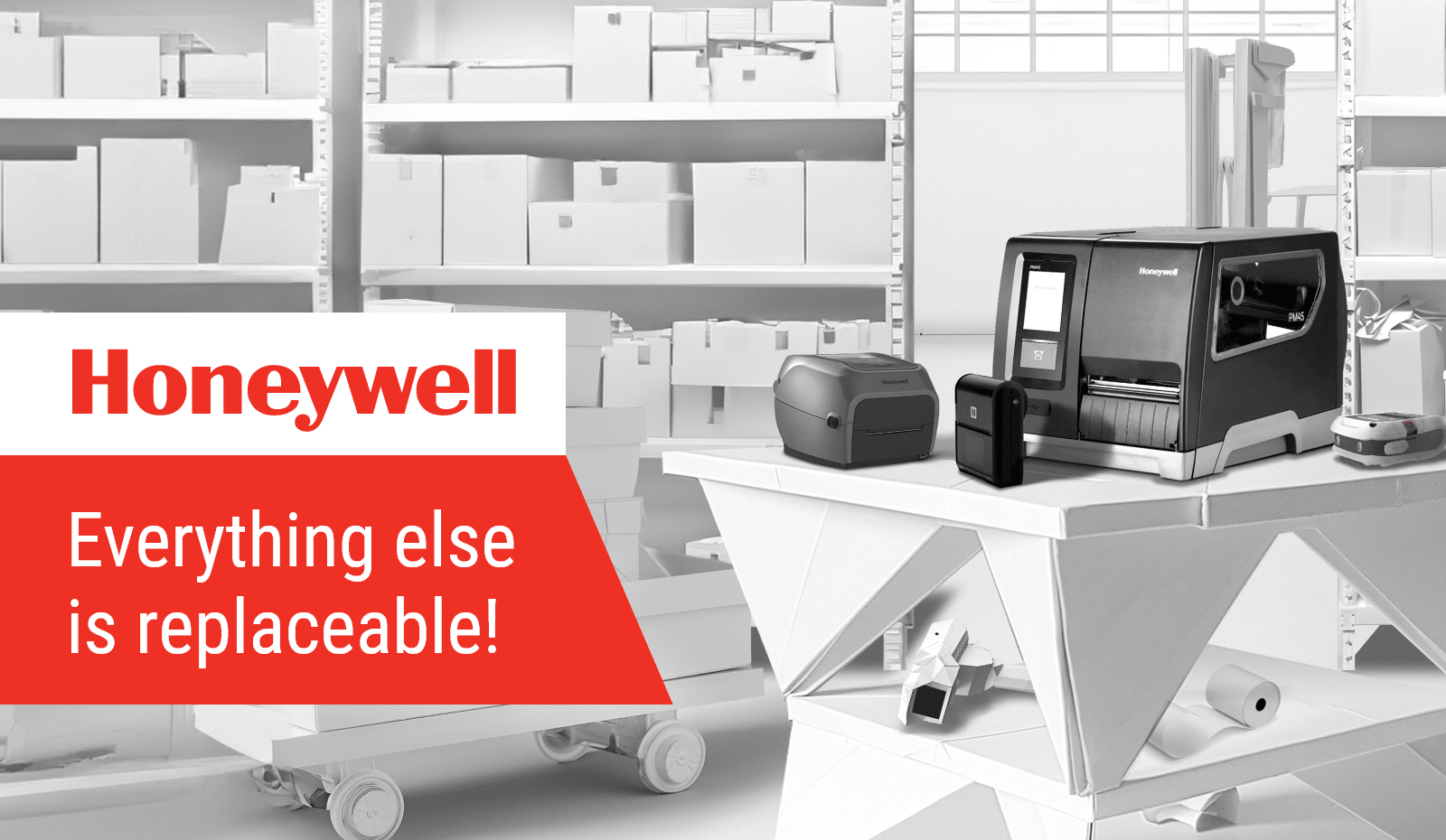
Honeywell has notified us about a list price increase taking effect on the 1st of May 2025....
Honeywell has notified us about a list price increase taking effect on the 1st of May 2025. This adjustment amounts to 3% and affects the entire product portfolio with the exceptions mentioned below.
Here is a breakdown of the relevant information for you:
• The new price list applies to all new orders as of the 1st of May 2025.
• Orders placed by the 30th of April 2025 will be invoiced at the current price.
• Pricing quoted as part of Project Registrations (PRs) will also be subject to the price adjustment as of the 1st of May 2025.
• Your active, approved Price Exceptions (PEs) remain valid until their expiry date.
The following product families are exempted from the price adjustment:
• Granit XP
• Granit Ultra
• Xenon Ultra 1960/1962
• Voyager 1470/1472
• CK62
• CT37
• CK67
Details about SKUs as well as the exact new prices are available on request from your sales representative. Do you have questions? We are here for you and will gladly support you with our expertise and service – simply let us know how we can best support you!

The new T3 desktop terminal from SUNMI combines high performance and flexibility for modern business applications in...
The new T3 desktop terminal from SUNMI combines high performance and flexibility for modern business applications in retail and hospitality. It is equipped with a 2.4GHz Qualcomm Kryo 265 octa-core processor, 4GB RAM and 64GB ROM for fast data processing. The 15.6-inch FHD touch screen provides a brilliant display. The versatile interfaces include Wi-Fi 5, Bluetooth 5.0 and NFC for contactless payments. The T3 80mm model also has an integrated 80mm thermal printer.
Order the new T3 desktop terminals from SUNMI right away from your sales representative!

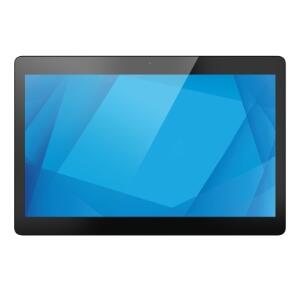
The all-in-one touchscreen computers of the new Elo E-Series 3 have been specially developed to support users...
The all-in-one touchscreen computers of the new Elo E-Series 3 have been specially developed to support users in the retail and hospitality sectors. They have a 15.6" TFT display with up to 10 touch points and an Intel N97 processor. Thanks to Elo Edge Connect, various peripherals such as EMV payment system, MSR, fingerprint scanner, cash drawer, barcode scanner or a customer-facing touch display may be connected. The user-friendly interface is based on Windows 11. For more flexibility, Elo also offers the touchscreens without an operating system.
Order the new touchscreen computers of the Elo E-Series 3 from your sales representative today!

The new TM...
The new TM-T20IV from Epson is based on the popular TM-T20III, but is even more powerful and offers more features. The POS printer impresses with a high print speed of 250 mm/sec. and an automatic paper reduction function. This makes it ideal for POS work areas such as retail, specialty shops, restaurants or grocery retailers. With 2 million cuts, it also has a significantly longer life cycle than its predecessor. In addition to the tried-and-tested dual interface (USB and serial), an optional triple interface (USB, serial and Ethernet) ensures greater versatility.
Order the new TM-T20IV from Epson today from your sales representative!
Our top categories







Selected products






Chatting with the CEO
Some CEOs never have time for anything – they are always busy, always stressed. That’s true, for the most part. But above all, a CEO needs to prioritise....
Some CEOs never have time for anything – they are always busy, always stressed. That’s true, for the most part. But above all, a CEO needs to prioritise. He needs to know what is important.
Ok, so what is important currently? To me, it’s important that I don’t lose touch with our customers. I want to know what challenges and chances we are facing. What do our customers need right now? How can we best support them? In which area could we improve?
That’s why I started the Jarltech CEO chat. Starting now, customers who are logged in to the webshop have the opportunity to chat with me. Of course, I will not be available all the time, but I will make time to be available on a regular basis, and as often as I can.
So, the next time you are logged in to our website and you see the chat symbol with my name on it, try it out for yourself! I look forward to chatting with you!
Europe 2025
Naturally, the current economic situation in Germany, as well as that in Europe, is heavily on my mind....
Naturally, the current economic situation in Germany, as well as that in Europe, is heavily on my mind. After all, I am a business owner who is responsible for 430 employees. What I am missing, however, is a clear political direction in terms of the economy. Does our European policy have any answers?
Let me put it this way: As a medium-sized entrepreneur in the year 2025, I have a plate full of challenges every day. We must constantly ask ourselves the question, how do we make our business even more sustainable? Sustainability has long since ceased to be a trend and has become something of a must.
Digitalisation is another hot topic. Whether that means automating processes, upgrading our IT infrastructure or sensibly implementing AI – you cannot afford to simply do nothing. At the same time though, we are struggling with heaps of bureaucracy. It would be so nice if the regulatory jungle would be streamlined a little, so that we do not need to battle mountains of paperwork each month. And no, I don’t mean in the sense of Elon Musk.
Then there is the matter of the skilled labour shortage. The demographic change is real, and it is beating down our labour market. On a European level we are discussing migration, but the discussion is (more or less) one-sided. It is an important discussion, but it must be comprehensive and not only conducted in a one-dimensional way. How do we deal with this change and how do we attract qualified specialists? This is a relevant factor in remaining competitive.
And, as you already know, we think outside the box: Geopolitical uncertainties and an ever-changing global playing field require us to remain flexible and agile. Whether it is retail, customs duties, energy prices or international conditions of competition – we must have Plan B ready to go – economy and politics together.
In short: Europe 2025 offers us many challenges but also enormous potential. European entrepreneurs want to lead the way and shape the future, but we need sensible framework conditions and planning security from politicians!
Complaining – the national pastime of the Germans
Let’s be honest, we Germans love to complain – about the weather, football, the economy, politics, etc....
Let’s be honest, we Germans love to complain – about the weather, football, the economy, politics, etc. This unites us all – regardless of our social class or political affiliation. Complaining is a national pastime in Germany. We love to grumble about high prices, the shortage of skilled workers and the weakening economy, while at the same time discussing our next holiday or the four-day week. Please don’t get me wrong, I am all for everyone taking a lot of time off and having a good rest – the only thing that bothers me is the fact that we love to see everything in such a gloomy light! We have to start working together to find solutions, because what we forget amidst all the moaning are our own abilities.
No, Germany is not falling apart! Germany still has a lot of untapped potential. We have people with great ideas, curious and inquisitive people (yes, even among Gen Z), a high average level of education, a high degree of legal certainty, a consistently strong industry, very good research ... and yes, we also have the capital. But we have to stop complaining and focus on our strengths. We are capable of innovation, we can be or remain market leaders in many areas, but, at the same time, we have to be open-minded. Even if one area collapses, we can successfully develop and expand a subsequent one. These are our strengths. However, we have to accept the challenge – be it in society, in politics or in the economy. Burying our heads in the sand won’t help us.
We are once again facing enormous opportunities for our future – whether in medical research, industry, the energy sector or, of course, across the board in the field of AI. And that’s just what comes to mind. There is, of course, much more. Let’s work together to develop new ideas that will advance us not only as a society, but also as a business location. There is potential out there, it just needs to be tapped! And by the way, we’ll have less reason to complain!