Chatting with the CEO
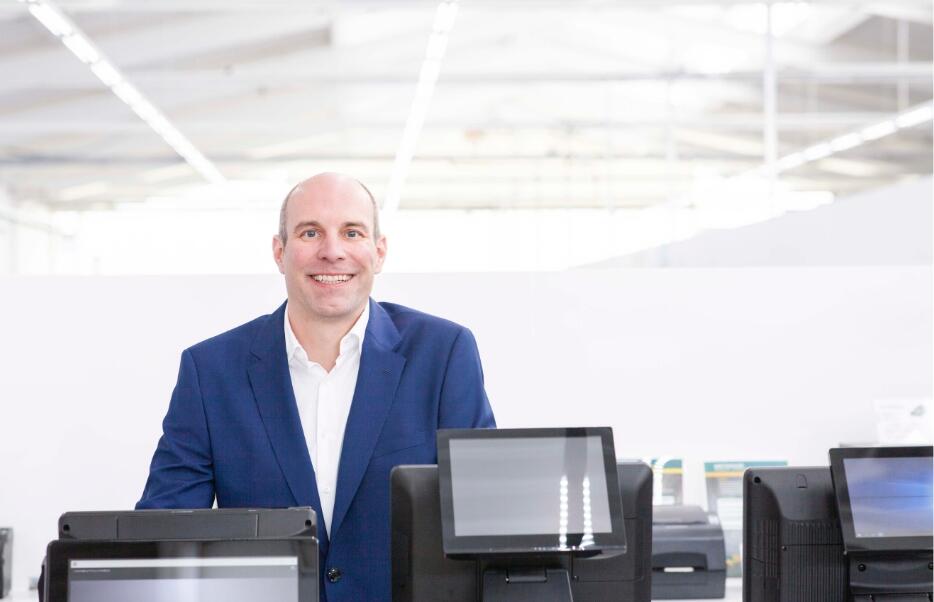
Some CEOs never have time for anything – they are always busy, always stressed. That’s true, for the most part. But above all, a CEO needs to prioritise. He needs to know what is important.
Ok, so what is important currently? To me, it’s important that I don’t lose touch with our customers. I want to know what challenges and chances we are facing. What do our customers need right now? How can we best support them? In which area could we improve?
That’s why I started the Jarltech CEO chat. Starting now, customers who are logged in to the webshop have the opportunity to chat with me. Of course, I will not be available all the time, but I will make time to be available on a regular basis, and as often as I can.
So, the next time you are logged in to our website and you see the chat symbol with my name on it, try it out for yourself! I look forward to chatting with you!
Chatting with the CEO
Some CEOs never have time for anything – they are always busy, always stressed. That’s true, for the most part. But above all, a CEO needs to prioritise....
Some CEOs never have time for anything – they are always busy, always stressed. That’s true, for the most part. But above all, a CEO needs to prioritise. He needs to know what is important.
Ok, so what is important currently? To me, it’s important that I don’t lose touch with our customers. I want to know what challenges and chances we are facing. What do our customers need right now? How can we best support them? In which area could we improve?
That’s why I started the Jarltech CEO chat. Starting now, customers who are logged in to the webshop have the opportunity to chat with me. Of course, I will not be available all the time, but I will make time to be available on a regular basis, and as often as I can.
So, the next time you are logged in to our website and you see the chat symbol with my name on it, try it out for yourself! I look forward to chatting with you!
Europe 2025
Naturally, the current economic situation in Germany, as well as that in Europe, is heavily on my mind....
Naturally, the current economic situation in Germany, as well as that in Europe, is heavily on my mind. After all, I am a business owner who is responsible for 430 employees. What I am missing, however, is a clear political direction in terms of the economy. Does our European policy have any answers?
Let me put it this way: As a medium-sized entrepreneur in the year 2025, I have a plate full of challenges every day. We must constantly ask ourselves the question, how do we make our business even more sustainable? Sustainability has long since ceased to be a trend and has become something of a must.
Digitalisation is another hot topic. Whether that means automating processes, upgrading our IT infrastructure or sensibly implementing AI – you cannot afford to simply do nothing. At the same time though, we are struggling with heaps of bureaucracy. It would be so nice if the regulatory jungle would be streamlined a little, so that we do not need to battle mountains of paperwork each month. And no, I don’t mean in the sense of Elon Musk.
Then there is the matter of the skilled labour shortage. The demographic change is real, and it is beating down our labour market. On a European level we are discussing migration, but the discussion is (more or less) one-sided. It is an important discussion, but it must be comprehensive and not only conducted in a one-dimensional way. How do we deal with this change and how do we attract qualified specialists? This is a relevant factor in remaining competitive.
And, as you already know, we think outside the box: Geopolitical uncertainties and an ever-changing global playing field require us to remain flexible and agile. Whether it is retail, customs duties, energy prices or international conditions of competition – we must have Plan B ready to go – economy and politics together.
In short: Europe 2025 offers us many challenges but also enormous potential. European entrepreneurs want to lead the way and shape the future, but we need sensible framework conditions and planning security from politicians!
Complaining – the national pastime of the Germans
Let’s be honest, we Germans love to complain – about the weather, football, the economy, politics, etc....
Let’s be honest, we Germans love to complain – about the weather, football, the economy, politics, etc. This unites us all – regardless of our social class or political affiliation. Complaining is a national pastime in Germany. We love to grumble about high prices, the shortage of skilled workers and the weakening economy, while at the same time discussing our next holiday or the four-day week. Please don’t get me wrong, I am all for everyone taking a lot of time off and having a good rest – the only thing that bothers me is the fact that we love to see everything in such a gloomy light! We have to start working together to find solutions, because what we forget amidst all the moaning are our own abilities.
No, Germany is not falling apart! Germany still has a lot of untapped potential. We have people with great ideas, curious and inquisitive people (yes, even among Gen Z), a high average level of education, a high degree of legal certainty, a consistently strong industry, very good research ... and yes, we also have the capital. But we have to stop complaining and focus on our strengths. We are capable of innovation, we can be or remain market leaders in many areas, but, at the same time, we have to be open-minded. Even if one area collapses, we can successfully develop and expand a subsequent one. These are our strengths. However, we have to accept the challenge – be it in society, in politics or in the economy. Burying our heads in the sand won’t help us.
We are once again facing enormous opportunities for our future – whether in medical research, industry, the energy sector or, of course, across the board in the field of AI. And that’s just what comes to mind. There is, of course, much more. Let’s work together to develop new ideas that will advance us not only as a society, but also as a business location. There is potential out there, it just needs to be tapped! And by the way, we’ll have less reason to complain!
The road to success: do we really have to get worse at everything?
Last week I had a conversation with a customer that left me speechless....
Last week I had a conversation with a customer that left me speechless. Our sales department asked me to speak to a customer on the phone who doesn’t buy from us because we supposedly supply end customers.
No problem, I thought. I called and explained that this is exactly what we don’t do, and that this is a key promise to our dealers. There are extremely rare exceptions, – only if a vendor forces us to, or a retailer explicitly asks us to. But that almost never happens.
Then it turned out that there was a misunderstanding: the customer said that we also supply small retailers. My answer: »Yes, we do and we have to, based on our contracts with the vendors. Our competitors do that too.«
»All correct«, I hear, but then it got exciting: »Your large competitors are not interested in small customers, so they are poorly served. At Jarltech, the small dealers feel comfortable because you provide a great service.«
I didn't know whether to laugh or cry ... A customer doesn’t buy from us because our service is too good? I hadn’t expected that.
But don't worry, contrary to the headline: We will continue to endeavour to offer every customer the best service we can!